Friday, April 11, 2014

A Room With A View


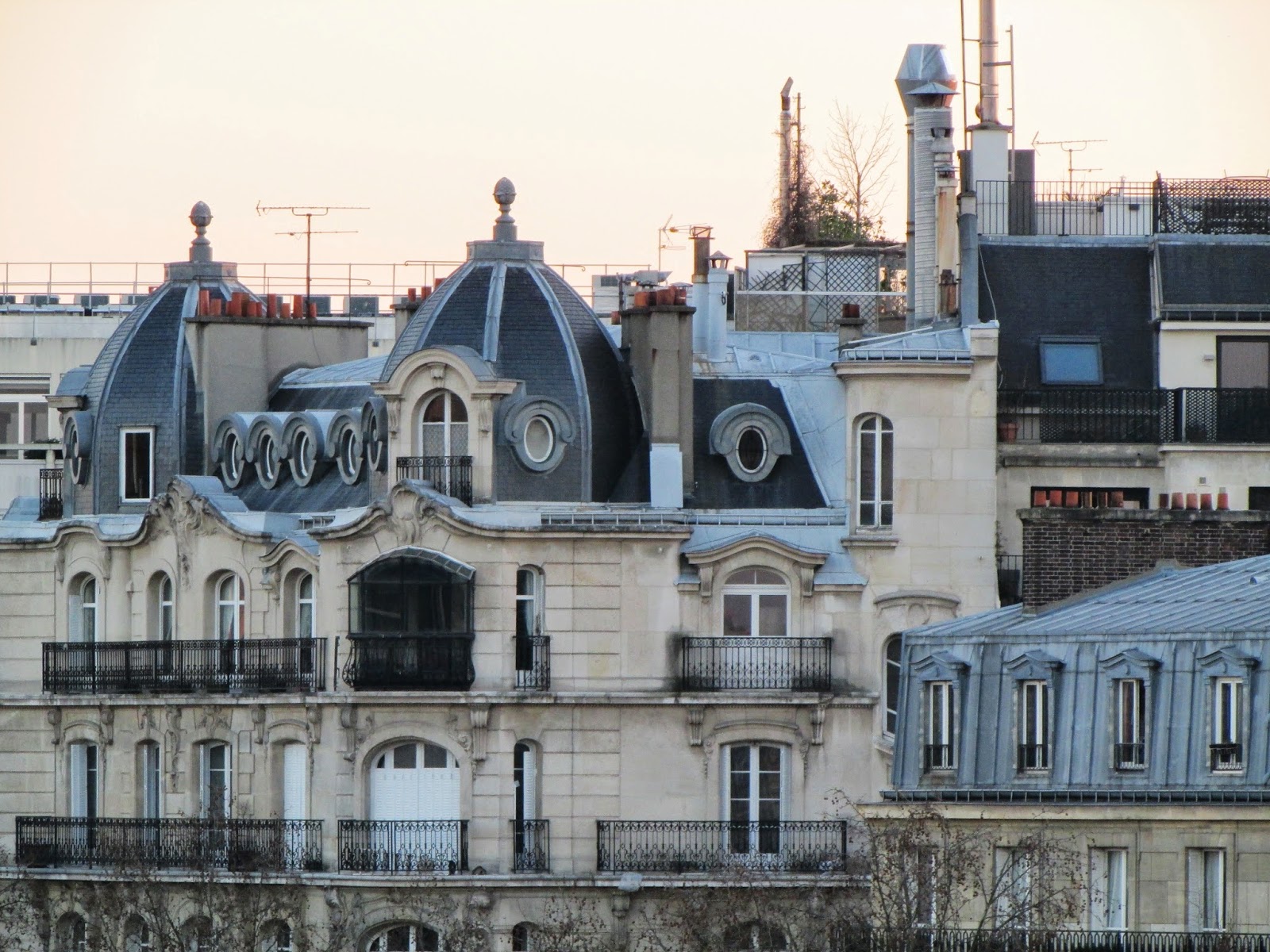
    Even though my rent could get me an apartment one hundred times bigger in Minneapolis, I've grown to love my little (emphasis on the 'little') spot above the gardens adjacent to the Luxembourg Gardens on the avenue de l'Observatoire. I know I'll never love my seven flights of stairs, but all of a sudden, I have all this gratitude for my view and my balcony, which are both rare. While enjoying the sun and a glass of wine out on my balcony, I can see the Montparnasse Tower, the Eiffel Tower, Saint-Sulpice, the Grand Palais, the Palais Garnier, the Sacré-Coeur, La Défense, the Louvre and the Palais du Luxembourg.
      
     I'm proud of my barely double-digit square meter-age- it's my first real apartment on my own! I'm a lucky girl, even if I don't have my own toilet or shower. Some of us get dishwashers and elevators, and some of us get glorified walk-in closets with gorgeous views. But hey, I can tolerate anything, especially in Paris. 

And a nice glass of wine always helps, too.


Love,
Rachel


My new forget-me-nots


My building


Wednesday, April 9, 2014

A Walk on the Wild Side


     As a not-born but bred Minnesotan, I'm feeling a little guilty that I made it through a winter without any snow in France. A few times, I've found myself complaining that I was cold, which I don't have the right to do while living here. After twenty-something years of dealing with hell Minnesota Winter, which has provided me with such warm memories as full-out blizzards on Halloween 1991 and my late-April birthday in 2013, I'm contented with the fact that Paris's leaves are now in full-bloom, jackets are optional and my shoes don't have salt stains. It's getting increasingly hard to argue that I'm not on a year-long vacation. Grad school abroad is really, really hard and it only looks like a vacation, I promise.

     On Saturday, after months of whining about it, I was finally able to convince my friends Matt and Emma to go along with me out to the little town of Fontainebleau to visit the château and hike in the national forest, which I did once two years ago. The royal château, dating back to the Renaissance in the sixteenth century, is an old, pre-Versailles royal residence that is infinitely more enjoyable to visit when the weather warms up because the crowds aren't so dense and it doesn't quite have that cattle-barn feel that Versailles has with its borderline-insane tourists. (On an unrelated note, Lana Del Rey's "Born to Die" video was filmed in the Trinity Chapel.)

     The 110-square-mile Forest of Fontainebleau was once a royal hunting park and now it's a great escape for city folk to experience some true, un-manicured nature within Ile-de-France. The forest is also popular for bouldering (Hear that, Emily?) and hiking. While I definitely love living in Paris, I also desperately need breaks to get out of the city, hear twigs crackling underfoot, get mud on my shoes and be among trees that aren't obsessively pruned into rectangles. 

Did you know the Seine isn't always brown, either?

Cheers,

Rachel


No tigers here!


The non-brown Seine


P.S. Here's my monthly video for March

Thursday, April 3, 2014

Such Great Heights


     Looking at a hand-sized portion of wall sculpture (Is that even the right term?), an intricate web of carved stone depicting some sort of religious scene. I turned to Amelia and joked, "That'd take my whole life to do." It makes me think, can you imagine if LinkedIn were around in the Middle Ages? You'd have to write something like, Title: Construction Worker, Location: Chartres Cathedral, Time Period: My entire life, Description: Eternally working my ass off. When you think about it, none of us has done anything so amazing and we wouldn't stand a chance in the applicant pool.

     We were standing in the Basilique Cathédrale Notre-Dame de Chartres in--you guessed it--Chartres, France, around an hour southwest of Paris by train. March 16 was a beautiful Sunday with warm weather and not a cloud in the sky, which was shocking to both Amelia (a friend from Central College Abroad who's in Paris for the TAPIF program) and I as now-seasoned faux Parisians. The unseasonable weather had caused an outbreak of extreme air pollution caused by sudden temperature spikes, a lack of wind and cool nights. I'd never seen smog like that before in my entire life and the conditions were likened to Beijing, which is really unnerving. As a result, Paris offered several days of free transportation in Ile-de-France, so Amelia and I were quick to plan a day trip to Chartres.

     We took the free train (I have serious doubts that it was, in fact, free that day. I think we were just lucky we never got caught.) from the Gare du Montparnasse and spent the day at our leisure, eating baguettes and croissants, sipping coffee on a terrace, walking, talking and in general awe of what's considered to be France's best Gothic cathedral. Last summer, my dad and I watched an episode of Nova called "Building the Great Cathedrals" (You can watch it here), which included the Chartres Cathedral and the difficulties it faces as stress continues to build on the arches and vaulted ceiling. I can't even understand how arches hold themselves up. I'll just add them to my list of things I don't understand, in good company with electricity, the Internet, outer space and French cheeses.

     We climbed to the top of the north tower and had the most spectacular view of the town and the surrounding countryside. I heard you can even see the Eiffel Tower on a clear day, but you know, Paris was being all Beijing that day so we couldn't. Drinking an espresso on a sunny terrace without a coat on and reminiscing about our old adventures in Paris, it felt so great to feel the sun and bask in the quietness and serenity of life outside the capital. And to breathe oxygen instead of smog. 

Chartres, je t'aime bien. 

Love,
Rachel


Wednesday, April 2, 2014

Première langue, deuxième langue

This is an essay reflection I wrote on my experience with French as my second language for a class on "the mother tongue" and psychoanalysis.            

« C’est probablement le défi de ma vie. Vivre et transmettre des messages, je dirais impossibles, d’une langue à l’autre, d’un monde à l’autre. »
Daniel Epstein, D’une langue à l’autre (Film de Nurith Aviv)
* * *
Je n’avais jamais considéré la signification ou l’importance de l’anglais, ma première langue, dans ma vie. Comme enfant des parents monolingues, mon enfance se déroulait dans un monde déconnecté du reste du monde. Il n’y avait pas de besoin urgent à apprendre une autre langue. Dans ma communauté, l’anglais était la seule langue parlée à l’école, au supermarché, dans la rue et chez moi. En fait, toutes mes confrontations avec les autres langues étaient réservées à la télé où dans les films ; toutes les langues me paraissaient à peu près pareilles. Au lycée, a l’âge de quinze ans, la première opportunité d’apprendre une deuxième langue m’est arrivée et j’ai commencé à étudier le français cette année-là. Mes premiers pas dans le monde du français ont été marqués par l’enthousiasme d’avoir trouvé un nouveau code dans lequel je pouvais m’exprimer et aussi par une grande agitation à cause de ne pas être de le faire bien. Malgré tout, le français a ouvert des nouveaux possibilités à découvrir des autres modes de penser et façons de vivre.

Huit années ont passé, et, d’une façon, je me sens peu différente que moi, la lycéenne. Ma relation avec la langue française est, d’un côté, sympa et formidable et de l’autre côté, angoissante et compliquée, qui s’est complexifiée dès mon arrivée en France, où je suis constamment entourée par cette langue étrangère. Il y a toujours un écart entre moi et le français ; je suis liée à ma première langue et c’est difficile à m’en éloigner vers le français. Je ne suis pas arrivée au moment où la langue devient un organe de mon corps, c’est plutôt comme un boucle d’oreille ou une écharpe que je porte mais je peux l’enlever et l’abandonner à tout moment. Je reste trop consciente que mon français est fortement marqué comme cela d’un étranger. Je me réapproprie la langue d’une façon qui risque toujours à laisser les traces de mon étrangeté, mon alterité en France. Je n’ai pas atteint un niveau confortable où je peux alterner entre mes deux langues sans penser et je me trouve toujours aux marges de la langue française, incapable de complètement comprendre et communiquer avec mes environs. Je suis toujours au seuil de l’abîme de l’inconnu d’une langue étrangère et les choses que je ne connais pas pèsent lourdement sur mes épaules.

Je me trouve toujours dans une bataille avec le désir d’améliorer mon français et la familiarité et l’aise de l’anglais. Quand je suis frustrée ou fatiguée, je reviens vite à l’anglais, ma première langue, comme un enfant à sa mère. J’ai honte de parler en anglais en France ; je me sens dévoilée et visible quand je voudrais bien m’intégrer. Toutefois, l’entre-deux-langues me permet à réaliser une vision du monde informée par deux cultures et aussi à développer et explorer un deuxième style d’écriture dans une langue étrangère, bien que mon utilisation diffère que celle des locuteurs natifs. Noté par l’écrivaine Shumona Sinha, quand on quitte le pays natal, on perçoit un développement du soi. Cette idée d’une croissance du soi est due, en part, à la langue en général qui façonne notre expérience de la vie ; s’il n’y a pas de mot pour décrire quelque chose dans une langue, on ne le voit pas, mais c’est peut-être possible dans une autre. On peut voir le monde et la force des cultures beaucoup meilleures avec la connaissance des langues supplémentaires.

Je m’identifie avec ce qu’on est écrit par Louis Wolfson dans Le Schizo et les langues. Pour Wolfson, sa langue maternelle s’agit comme une violence qui lui piège. Il n’avait pas d’enfance en français, mais il choisit de sortir de sa langue prédéterminée avant sa naissance et utiliser le français pour aider lui-même. Tandis que le français lui aide à sortir de sa folie, le français m’aide à améliorer ma connaissance du monde et de ma propre culture et langue ; je peux me situer dans le monde et devenir consciente des forces et de faiblesses de la culture dont je viens. De plus, le français me pousse pour analyser mon propre écriture, mes idées et mes penchants.


Comme Samuel Beckett et Wolfson, je suis aussi impressionnée par l’écrivain américain Julian Green qui utilisait la langue au filtre de la langue maternelle (pour lui, l’anglais) dans ses œuvres comme Le Langage et son double et Paris. Ce qui est frappant est qu’il a pris une décision consciente d’écrire dans une langue qui n’était pas l’une de son pays natal. De cette façon, il démontre que la langue maternelle, bien qu’elle soit choisie avant la naissance, ne détermine pas la trajectoire de la vie ; il est bien possible de pénétrer dans les autres cultures et commencer à plus développer le soi. Avec la continuation de mon immersion en français pendant ma vie en France, je suis certaine que j’achèverai une connaissance du français qui trouvera une place plus permanente, plus marquée dans mon cœur.  


Thursday, March 20, 2014

Istanbul, Crete & Athens


“If you’re 22, physically fit, hungry to learn and be better, I urge you to travel—as far and as widely as possible. Sleep on floors if you have to. Find out how other people live and eat and cook. Learn from them – wherever you go.”
- Anthony Bourdain

*     *     *

ISTANBUL


     California knows how to party. 2Pac is louder than the fifteen other voices in the shuttle as the headlights light up one of those universal green road signs: "İstanbul" with a white arrow. In the city of L.A. Mounds of apartment buildings crop up in the blackness around us. Where are we? The driver next to me drives with one arm, the other clutching his phone that he shouts into, pausing every so often to assure me that my backpack that keeps shifting over the emergency break "is okay." He makes no attempt to alter his driving as we shoot through an automatic toll. In the city of Compton. Neon corporation signs like Toyota light the way as the city grows denser. Minarets spear the sky. We keep it rockin'. What's better than the first glimpses of a new country? We keep it rockin'.

     I'd never been so far away from home before I went to Istanbul the last week of February. The past few weeks since then have been so congested with midterms and the onset of unseasonably good weather in Paris that I've put off writing about it until now. For the last spring break of my life, I traveled with my friend Rebecca and her two friends from Notre Dame who are teaching English in France, Allison and Kelsey. Uncharacteristically, I let the others organize most of the trip. The night before we left, I packed and watched a few videos in a last-ditch effort to learn at least one word in Turkish. I hadn't been to a non-Francophone, non-Anglophone country in almost two years, so I wanted to make an effort rather than assume that the whole world speaks English (When people say that, I want to scream). But damn, Turkish is a lot harder for an English speaker than French. Overall, I can only recognize 'thank you' when it's written down, but I can't tell you how it's spelled or how it's pronounced. I can also recognize rakı and nargile, but that's only from experience, not from any conscious effort.

    Feelings of that great French word dépaysement ran high, the feeling of complete disorientation in a foreign environment. I’d never been in a country where I physically and culturally stick out so much and there’s really no way in hell that I can be mistaken for a local. I couldn’t decipher any of the language written on signs or maps, had not a clue about the layout of the city, didn’t know what Turkish people ate or drank or did with their time, didn’t know how to get plastic tokens for the tram, didn’t know anything about Istanbul. I only knew about Islam, kebabs, the Bosphorus and Liam Neeson being a sixty-year-old badass in Taken 2. The city just never occurred to me. It’s probably the most humbling experience to be among thirteen million people you know nothing about and who don't know much about you either. This is one of the reasons I want the career that I do in study abroad; encouraging young Americans to have experiences out of their tight isolated bubbles can only be the start to overturn how we’re perceived (And I’ve certainly heard some not-so-positive words in my time abroad). We are woefully underprepared for the future and most of the world, believe it or not, is not a replica of the United States.

     At our hostel in the Sultanahmet neighborhood—the tourist epicenter surrounding the Blue Mosque and the Hagia Sophia—I met a pilot from Ohio named Austin who’d been traveling through Africa for weeks. He was so grateful to be back in a Western country again. This struck me because I’d never been somewhere so completely different from anywhere I’d been in “the West.” What is “the West” anyway? Can it be defined with borders? What makes a place “Western” or “non-Western”? I thought about that a lot during those four days in that city where East meets West and I don't have any answers.

     On our first full day, Sunday, we took a long boat tour to the tiny fishing village of Anadolu Kavağı—the very first time I’d ever been in Asia! We chose a fresh sea bass and had it cooked for us for lunch and then climbed up to the Yoros kalesi, a castle in ruins with a panoramic view of Istanbul on one side and the Black Sea on the other.

    On Monday and Tuesday, we went into the New Mosque, the Spice Bazaar, the Topkapi Palace, the Basilica Cistern, the Blue Mosque, the Hagia Sophia and the Grand Bazaar, where I remembered what a pleasure it is to barter. It rained. It was cold. I had wishfully packed things like a swimsuit, sunscreen and a light jacket—half-thinking that Google Images is real-time photography of the current weather—instead of a warm coat and sweaters. None of the tourist sites were heated as far as I could tell, so I channeled my brave inner Minnesotan and sucked it up.

    The highlight of our time in Turkey was when we were fortunate to see Istanbul with a local, Atıl, the brother of a friend in Paris. Over two days, he brought us to his university, Taksim Square, coffee shops, tea gardens, rooftop bars, most of which were in non-tourist areas far from the city center, while introducing us to rakı, ayran, chai tea, Turkish coffee, salep and nargile. It was so much fun to have an authentic experience in this city I knew nothing about. I’ve never had so much tea in my entire life.

     Inside the Hagia Sophia, I said I never wanted to leave Istanbul. While I was almost certainly under the influence of just having held a cat in my lap, I was only partially kidding. The city was full of delicious food, reasonable prices (Hear that, Paris?), incredible culture and the nicest people I’ve met in Europe. I’ll be back.


Lunch in Anadolu Kavağı

Black Sea
Yoros kalesi


Basilica Cistern

Hagia Sophia
The Grand Bazaar
Hagia Sophia
My first tea in years.


CRETE


     It always starts off with a car here. Greece is the only foreign country I've driven in and I love it. With less than two minutes of paperwork, instructions and a seventy-euro fee (last time no one even asked for a valid driver's license), we sped away from the airport in Heraklion along cliffs in our tiny red Toyota, elated to have a touch of American freedom usually stunted by the practicality of the Paris métro (Not that I've ever wanted to sit behind the wheel in Paris. Ever.). Orange sellers in shacks dotted the highway along the north coast en route to the Venetian port city of Rethymnon and I thought, what if I quit grad school and sold oranges on a Greek island? I'm still holding that as an option.
   
     Our hostel was in the Old Town of Rethymnon and not accessible at all by car. The only worker was a little day-drunk and had holes in his pants, but hey, no judgment. We didn't stay in our hostel really at all other than to sleep and use the outdoor showers, which was a little unsettling knowing Holes-In-His-Pants was floating around somewhere. We ran to the port to catch the one Cretan sunset we'd see on this trip and had dinner along the water with "a dessert on the house" which was fruit and ouzo, neither of which are dessert in my vocabulary, but are always welcomed. And we saw stars- in the sky. I can't remember the last time I saw those.

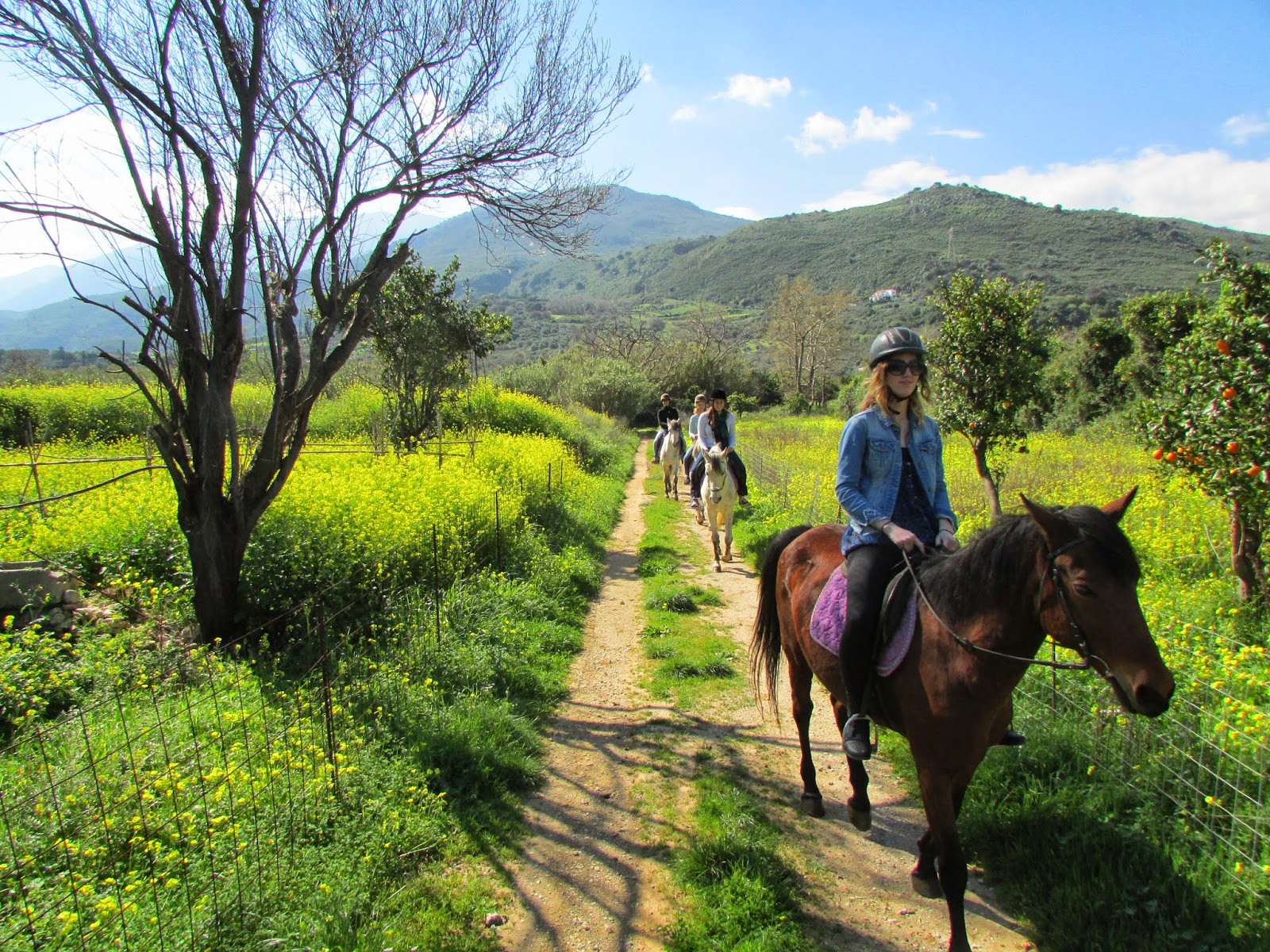
     The next day, I drove us west to Georgioupolis to go horseback riding. The "road" up to the ranch was more of what I'd imagine the ground to look like after a giant avalanche goes by. Water from puddles washed up over the hood and it's a miracle that I didn't lose any teeth on the steering wheel. A Belgian named Kristi greeted us enthusiastically outside the stable and within a few minutes we were on horses. The last time I rode a horse, I think I was three and it was a pony. But it didn't matter. I got so used to it that I can only describe as like driving a car that has opinions. We rode down the mountain through a river, olive groves, mulberry trees, lemon trees, a marina and the little town of Georgioupolis. It was so peaceful to feel the sun on my face, the scent of olives in the air, and have no technology in my hands. I may live in a big city, but I think my heart is in these sorts of quiet places.


Fortress of Rethymnon


Georgioupolis

Georgioupolis

Georgioupolis


Rethymnon


ATHENS


     There are few things that I hate more than alarms. The intercom on the ferry jolted us up only a few hours after I'd fallen asleep and the sky was still black. I have no idea what time it was. Normally, if I have no engagements for the day, I'll sleep until the afternoon, so this was just unpleasant. We threw our shit together and took the train into Athens to the touristy Plaka neighborhood. Thankfully the others weren't so anti-morning and were able to navigate. I, on the other hand, napped the first chance I got.
    
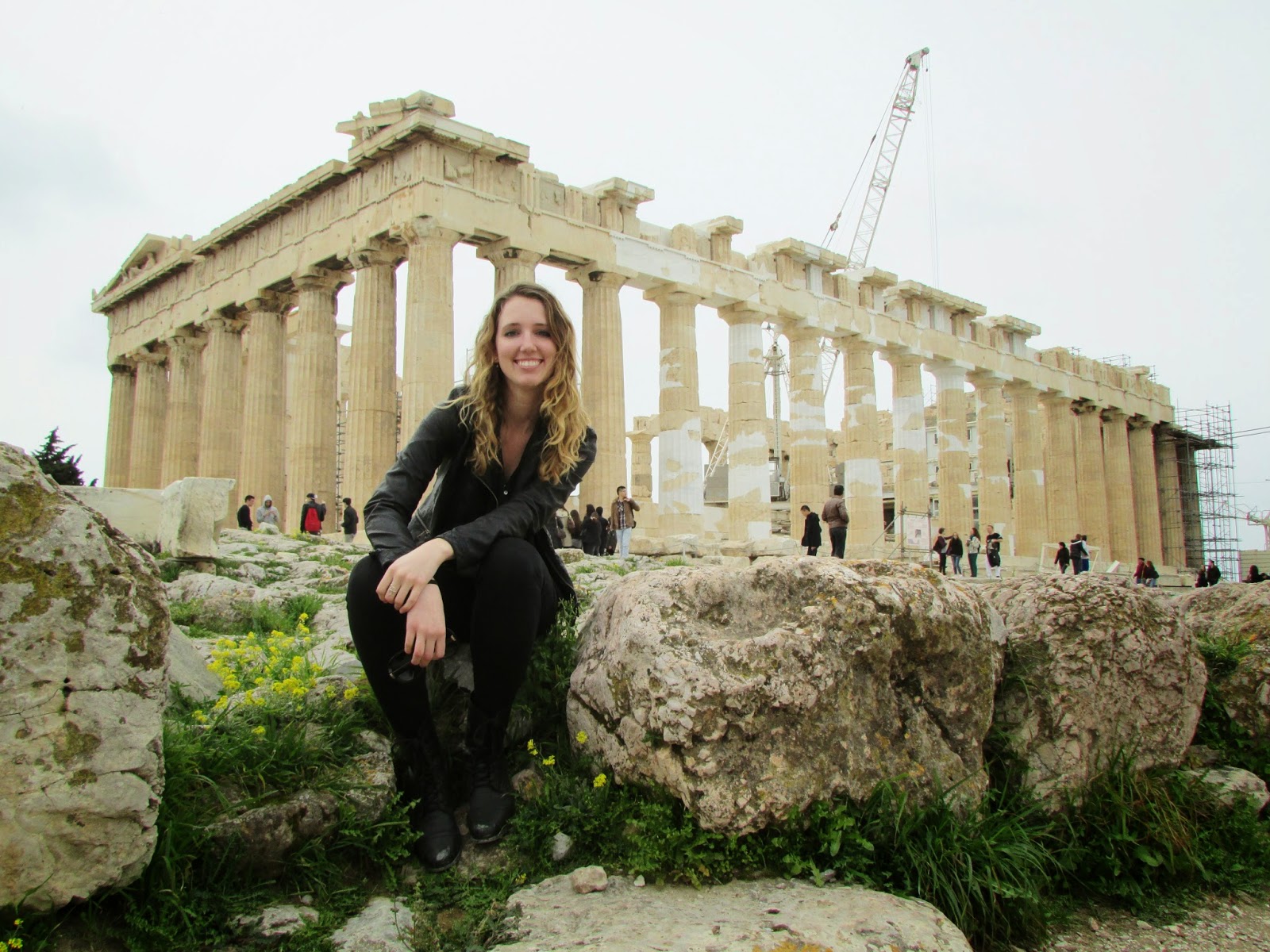
     At the Acropolis, I was denied my customary EU student discount, even though I showed the bitch woman working my EU student visa. She wanted to see my student ID. What is more official than a sticker stamped by the French government in my passport issued by the American government? Apparently the plastic card with a worn-off picture of me that I left in Paris. Every other place in Europe has accepted my visa. I'm the type to just eat a raw steak even if I ordered it well-done, so it was surprising even to me when I started raising my voice at the employees and saying things I shouldn't have. But she shouldn't have denied me. 

   I'll never forget the first time that I saw the Eiffel Tower and wondered why it was brown and not black like I'd pictured. Something is always a little off when you see famous sites in person for the first time. Standing beside the Parthenon, it looked exactly how I'd pictured it but then again, not at all. Was it bigger? Smaller? Older? Newer? I still don't think what I saw has registered in me.

     We went to the new Acropolis Museum nearby and tagged along behind a tour group with bodyguards who we presumed were EU delegates in town. Overwhelmed by statues and dates and facts and pottery, we left in a state of straight-up delirium. We drank coffee and shopped and ate dinner for the rest of the evening in the company of traditional Greek music. Or something like that. I was tired.

     Rebecca and I were the last two to stay on until Saturday and we had the day to explore, just the two of us. So we drank and ate and drank and shopped and climbed Mount Lycabettus and talked and laughed and drank. It was a perfect good ending to our week of travel.


At the Acropolis


The Parthenon

Acropolis

Acropolis


If you read till the end, congratulations. It was long, and I apologize. For all of my pictures, head to my Flickr.

Love,
Rachel